
Top FAQs About Sintered Stone Kitchen Countertops
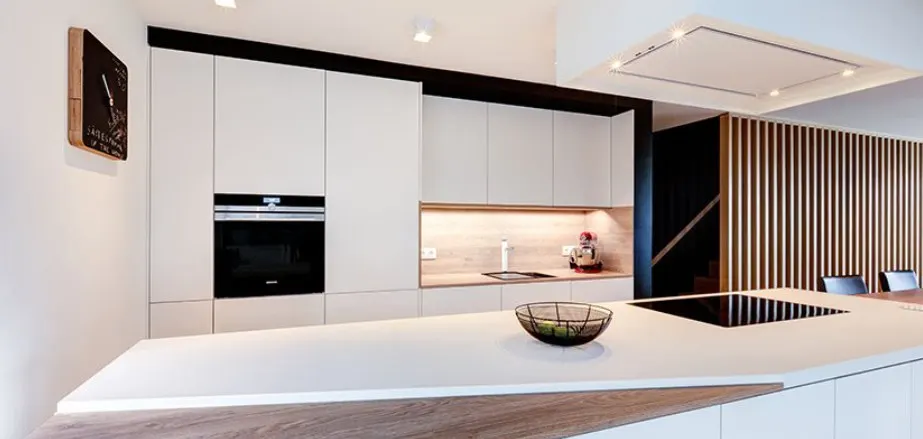
1.What is Sintered Stone?
Sintered stone is a highly durable material that is resistant to scratches, stains, heat, and UV light. It offers a wide range of design options mimicking natural stone and requires minimal maintenance due to its non-porous surface.
2.Which is better, Sintered Stone Countertop or Quartz Countertop?
Sintered stone is generally considered better for its superior durability, resistance to scratches and heat, and realistic natural stone appearance, while quartz offers more design variety and affordability.
3.What is the downside of sintered stone? The downsides of sintered stone include high cost, challenging installation due to its density, heavy weight, limited color options, difficult and costly repairs, a cold surface feel, and potential for brittle edges.
4.What are the pros and cons of sintered stone?
Sintered Stone Pros:
Durability: Highly resistant to scratches, stains, and impact.
Heat Resistance: Can withstand high temperatures.
UV Resistance: Does not fade or discolor in sunlight.
Non-porous: Resistant to water absorption and bacteria growth.
Variety: Available in various textures and finishes.
Sintered Stone Cons:
Cost: More expensive than many other materials.
Installation: Requires skilled professionals due to its hardness.
Weight: Heavy, needing additional support in cabinetry.
Limited Colors: Fewer color options compared to some materials.
Repair Difficulty: Hard to repair if damaged.
Cold Surface: Can feel cold to the touch.
Brittle Edges: Edges may be more prone to chipping.
5.Which is the best sintered stone?
6. Is sintered stone expensive?
Yes, sintered stone is generally considered an expensive material. The cost is higher than many other countertop materials such as laminate, solid surface, or some natural stones.
Contact us:
wa.me/+6590088885 ( Jonathan)
wa.me/+6597269031 ( Apple )